
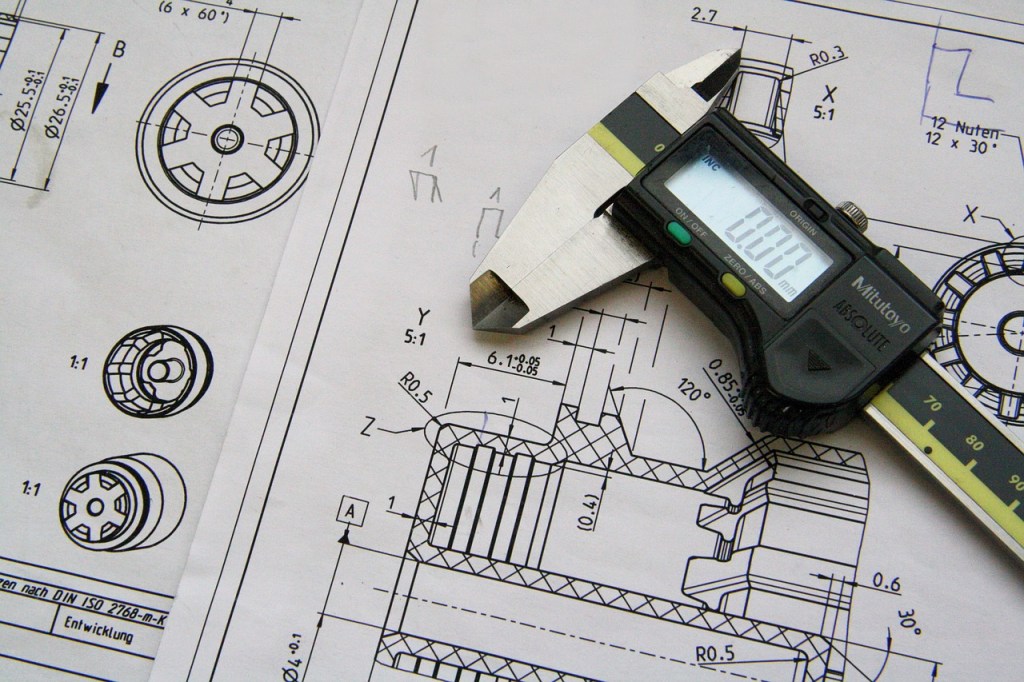
In the dynamic world of engineering and manufacturing, precision is the key that unlocks innovation and excellence. Designing and producing complex parts with flawless functionality and seamless performance is a formidable challenge, but it’s a challenge that can be met with the aid of Geometric Dimensioning and Tolerancing (GD&T). This revolutionary system serves as the secret language between engineers and manufacturers, allowing them to communicate design intent with unparalleled clarity and accuracy.
Geometric Dimensioning and Tolerancing (GD&T) is a powerful system that bridges the communication gap between engineers and manufacturers, empowering them to define design intent and engineering tolerances with unparalleled precision¹. By utilizing a set of rules and symbols, GD&T unleashes the full potential of manufacturing processes, optimizing control over variations. In this article, we’ll dive into the significance of GD&T in engineering and manufacturing, explore its fundamental concepts and key elements, delve into the standards and practices of GD&T, and look into a case study to see GD&T in practice.
Overview of GD&T
GD&T is based on a set of key principles that enable the effective communication of design intent. It employs a system of rules and symbols to express the tolerances and requirements for geometric characteristics.²
The tolerancing aspects of GD&T can be categorized into four main areas: Form, Orientation, Location, and Run-Out. Each category defines specific criteria for controlling the variation in different geometric features, ensuring the desired functionality of the part.³
The development of GD&T can be traced back to Stanley Parker, who introduced it during World War II while working at the Royal Torpedo Factory in Scotland. Parker’s work focused on developing tolerancing practices that addressed the functional requirements of designs.²
The first standards for GD&T were established by the U.S. military in the 1940s, with the publication of MIL-STD-8 in 1949. Subsequently, the American Society of Mechanical Engineers (ASME) published the first edition of GD&T standards in 1957. The International Organization for Standardization (ISO) also published its version of GD&T standards in 1996.²
Importance of GD&T in Engineering and Manufacturing
GD&T plays a crucial role in engineering and manufacturing for several reasons. Here are a few reasons GD&T is important for engineers and manufacturers:
1. Communicating Design Intent: GD&T provides a standardized language to express the design intent of a part. It allows engineers to communicate critical specifications and requirements accurately, reducing the possibility of misinterpretation or errors during the manufacturing process.²
2. Focus on Function: GD&T places emphasis on the functional aspects of a part rather than merely its dimensional characteristics. It ensures that the part’s form, orientation, and other geometric features align with the intended function, resulting in more reliable and high-performing products.²
3. Cost Reduction: By incorporating GD&T principles, engineers can optimize tolerances and define manufacturing limits more effectively. This reduces costs by minimizing rework, scrap, and inspection time while still meeting the necessary specifications.²
Basic Concepts of GD&T
GD&T involves many concepts that can help you utilize the tools well. Here are two fundamental concepts you can use with GD&T:
1. Feature Control Frames: Feature control frames are notations added to engineering drawings to specify tolerances. The leftmost compartment of the frame contains the geometric characteristic to be controlled. The second compartment indicates the shape of the tolerance zone. Separate boxes are used for each datum feature that the control refers to, with optional encircled letters serving as feature modifiers to indicate conditions such as maximum material condition (M), least material condition (L), unequal bilateral tolerance (U), or projected tolerance zone (P).¹
2. Geometric Symbols: GD&T employs a range of geometric symbols to communicate tolerances and requirements for various features. These symbols convey information about form, profile, orientation, location, and runout, ensuring that critical dimensions and specifications are effectively conveyed.¹
Difference between Geometric Tolerancing and Size Tolerancing
An important aspect of understanding GD&T is knowing what geometric tolerancing and size tolerancing are and knowing the difference between the two.
While size tolerancing regulates the size of each dimension, geometric tolerancing focuses on controlling shape, parallelism, tilting, position, runout, and other factors. Geometric tolerancing ensures that the functional requirements of a part are met, independent of its size. A principle to remember when dealing with these two types of tolerancing is the principle of independency. This means parts can pass size tolerances and fail geometric tolerances, as the two tolerance types have no direct relationship.³
Case Study: Barb Fitting for a Medical Device
To illustrate the practical application of GD&T, let’s consider an imaginary case study involving a barb fitting for a medical device.
The Challenge:
We will say a company called Bob’s Medical Fittings, is a leading medical device manufacturer and faces two critical challenges with their new barb fitting design. First, they grapple with the risk of tubing dislodgement during device use, which could lead to potential patient harm. Second, the manufacturing process introduces variations that make it difficult to install the tubing onto the barb consistently. These challenges demand a comprehensive solution that ensures precise tolerances while accounting for manufacturing variations.
The Manufacturing Solution:
The barb fitting, a delicate injection-molded part, was inherently susceptible to variations due to the intricacies of the manufacturing process. To address this, the engineering team proposed the implementation of GD&T principles. GD&T would empower the manufacturer to add specific tolerances to the barb, accommodating manufacturing variations while ensuring a secure fit for the tubing during usage.
Embracing the Power of GD&T:
By incorporating GD&T, the engineering team was able to control critical geometric characteristics of the barb fitting more effectively. Tolerances were strategically placed to align with the functional requirements of the medical device, leaving no room for error. Features like the angle and diameter of the barb were meticulously controlled to ensure consistent and secure tubing installation without compromising the device’s overall performance.
The Transformation:
The application of GD&T brought about a remarkable transformation in the barb fitting’s performance and reliability. The risks of tubing dislodgement during device use were virtually eliminated, providing peace of mind for both patients and medical practitioners. Additionally, the improved tolerancing significantly reduced the likelihood of manufacturing defects, leading to a substantial decrease in the number of failed parts during production.
Benefits and Impact:
The benefits of implementing GD&T were manifold. First, the medical device manufacturer witnessed a substantial reduction in the number of costly product failures, translating into impressive cost savings. The production process became more efficient, ensuring resources were utilized optimally. Secondly, the enhanced reliability of the barb fitting positively impacted the overall safety and effectiveness of the medical device. The manufacturer gained a competitive edge by delivering high-quality products consistently, earning the trust of healthcare professionals and patients alike.
Conclusion
Geometric Dimensioning and Tolerancing (GD&T) is a powerful tool in engineering and manufacturing that enables effective communication of design intent, optimal control of manufacturing variations, and cost reduction. By utilizing standardized rules and symbols, GD&T enhances precision, minimizes errors, and improves product quality. Understanding the basic concepts and key elements of GD&T empowers engineers and manufacturers to achieve greater efficiency, reliability, and performance in their products.
Sources
- “GD&T Basics” – Website: https://www.gdandtbasics.com
- “Introduction to GD&T” – Formlabs Blog: https://formlabs.com/blog/gdt-geometric-dimensioning-and-tolerancing/
- “What is GD&T?” – Keyence: https://www.keyence.com/ss/products/measure-sys/gd-and-t/basic/about.jsp
Written with the help of ChatGPT
Image by Anja Heidsiek from Pixabay
 ThinkMedTek
Leave a comment