
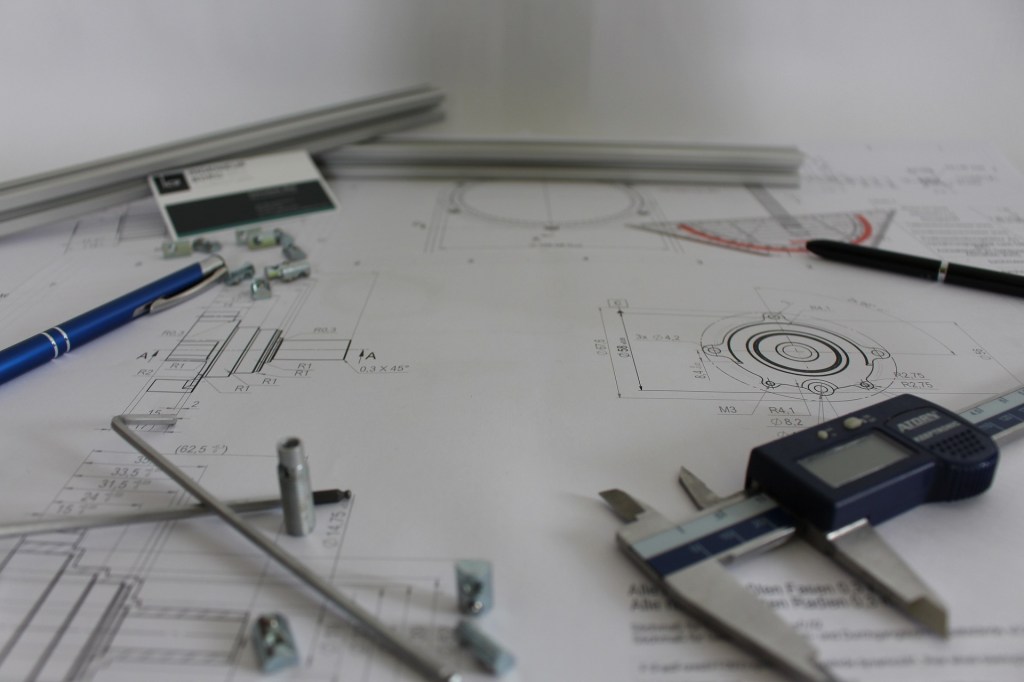
Have you ever worked hard to develop a product only to find out it is expensive to make, it can’t be fabricated the way you want, the assembly isn’t practical, and it just isn’t what you hoped it to be? You worked hard to have the part prototyped and to make sure it would fulfill the needs of the end customer, but now you have made it to getting it manufactured and it isn’t going the way you hoped. This is a common and understandable frustration when developing new products and the issue might be you didn’t design your product for manufacturing and assembly.
What is Design for Manufacturing and Assembly (DFMA)?
DFMA is the collaboration between design and manufacturing. It involves two pieces of analyzing a design; design for manufacturing(DFM) and design for assembly (DFA). DFM is designing parts for ease of manufacturing and cost effectiveness. DFA is designed as an assembly for ease of assembling, the number of parts in the assembly, and the ease of handling.
5 Questions to Consider for DFMA
What material do you want your product made of?
As you design your product, an important thing to consider is the material you want your product made out of. When considering this you will want to think about the environment, the conditions your product is under, and what regulations you want to meet. In addition to this you also want to consider how the product will be manufactured with that material. When considering the material, think about how it can be machined, how the quality will be affected, and the cost to make the part using that material. (2)
How will your part be manufactured?
Related to choosing a material for the manufacturing process, you will also want to analyze your part to be designed for the manufacturing process. Each fabrication process is done in a different way and has different requirements. For this reason when designing your product make sure you design to the specific fabrication process. For example if the product is milled, you don’t want to have tight inside corners where the mill can’t get to or needs special tooling.
How can the part be designed for lower cost and higher quality?
Building upon designing for the fabrication process, you also want to consider other ways you can lower costs and keep quality. One way is to review your tolerances. When looking at your product, consider if making a more lenient tolerance will affect the function of the product or the quality. If it can be looser, you will be able to save costs in your product. Another way to reduce costs is to reduce secondary operations. Does your part have to have post processing or can you select a material that doesn’t require extra steps? For example in some cases you want to add polish to a metal or plastic part. However will this affect the part or be seen if you don’t have the polish. If it isn’t really needed, consider removing the post processing.(3)
How will your product will be assembled?
You can either design your product to be easy to assemble or very cumbersome. When designing for assembly a few things to consider is whether you can eliminate parts or fasteners. This will reduce steps in assembly, reduce handling, and reduce inventory needs. Another way to improve your design is to use standardized parts. Can you use the same size screw throughout your product? Does the screw have to be custom or can it be something you can buy from a hardware store? Another consideration is designing parts of your product to be either multi-functional or multi-use. This can reduce the number of unique parts throughout the assembly.(1)
What does the life of your product look like?
As you think through the various aspects of your product design, you will also want to consider what the lifetime of your product will look like. You will want to think about how it is handled, where it comes from and goes to, where it is stored, and how it is shipped. These are all aspects that need careful consideration in your design to ensure your end user gets the product they expect. You will also want to consider how your product will be serviced. You will want your design to be easily repaired if it breaks down or something happens to it.(1)
Designing products is a difficult but rewarding journey. As you go through your design process, these 5 questions will help you assess your product from a DFMA aspect and in the end will help save money and improve quality.
References:
- “How to Design for Manufacture and Assembly.” Rolls Royce, Dec. 2019, https://www.rolls-royce.com/~/media/Files/R/Rolls-Royce/documents/sustainability/value-chain-competitiveness/7-vcc-how-to-design-for-manufacture-and-assembly.pdf.
- Electronics, Bead. “The 5 Principles of Design for Manufacturing (DFM).” The 5 Principles of Design For Manufacturing (DFM), 23 Dec. 2020, https://www.beadelectronics.com/blog/the-5-principles-of-design-for-manufacturing-dfm.
- “Design for Manufacturing – Guidelines – University of New Mexico.” University of New Mexico, https://www.unm.edu/~bgreen/ME101/dfm.pdf.
Image by Christian Reil from Pixabay
 ThinkMedTek
Leave a comment